

Introducing the two breeds here at Green Hills: the Australian miniature and Nigerian Dwarf goats
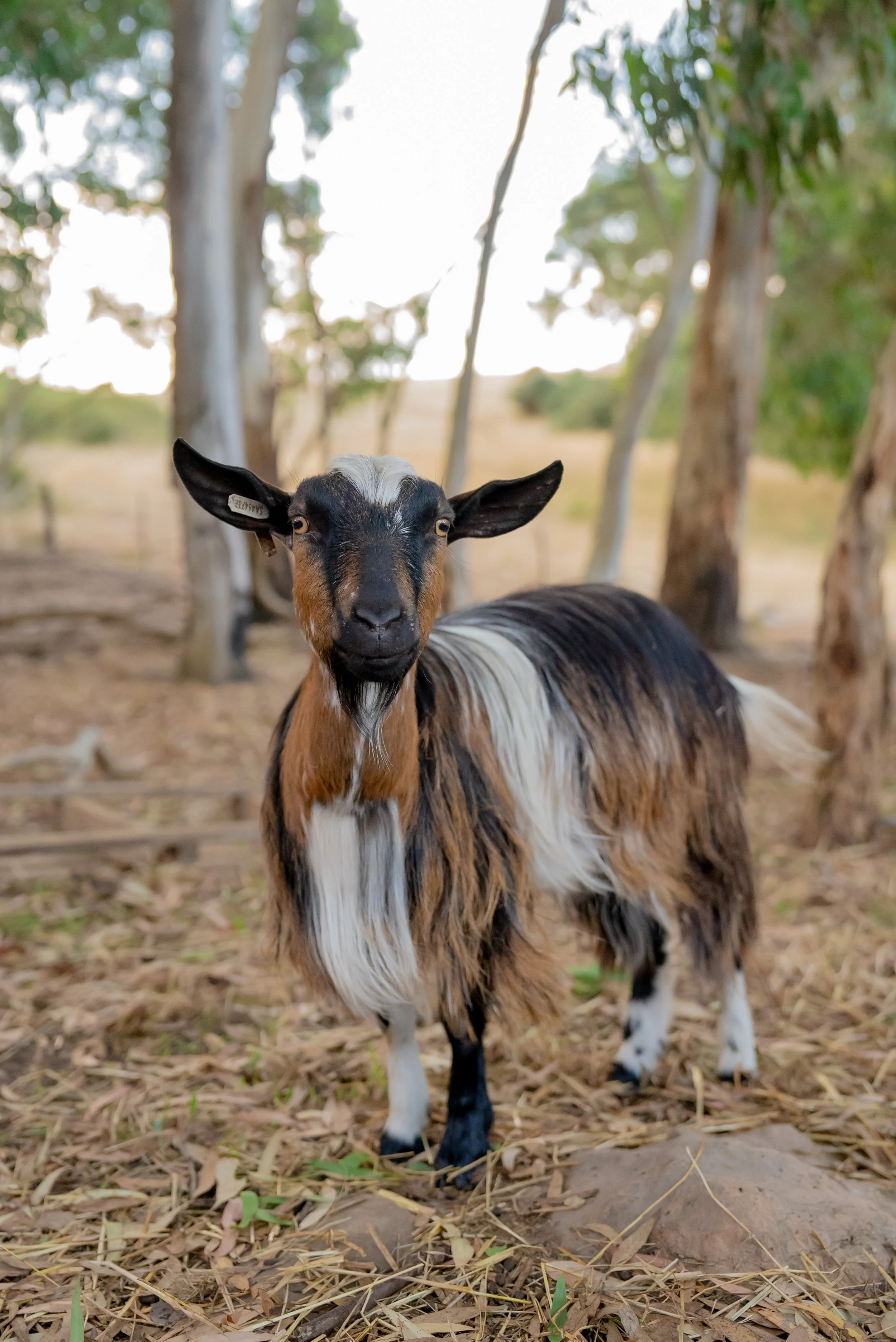
Australian Miniatures
Brief History
The Australian miniature goat was officially recognised in 2000. The breed was developed by careful breeding of select, small goats (predominately cashmere and angora) cross-bred with rangeland goats. Rangeland goats are a composite breed of goat which has become naturalised throughout Australia’s rangelands to the extent that they no longer resemble their original European ancestors.
The breed was introduced by Sue Ludwig who had spent many years selectively breeding to produce this miniature delight. Sue also developed the original breed standards and registry for Australian miniatures. The breed rapidly grew in popularity and there are now many dedicated breeders across the country with pure-bred stock.
Milk Composition and Uses
Australian miniature goats are considered a dairy breed although are not officially recognised as such. Goats’ milk is known for having many benefits to humans including easier to digest than cows’ milk, and having fewer allergens. Goats’ milk is also higher in calcium that cows’ milk making it ideal for those that are wanting to focus on bone strength.
Australian miniature goats can produce between 1-2 litres of milk daily although there are individuals who have been recorded as producing more than this. Green Hills uses the excellent, well-established genetic pedigree of Australian miniature lines to enhance the milking capabilities of our goats.
Breed Overview
Australian Miniature Goats are small in stature, big in personality' (MGA, 2021).
Their conformation is similar to that of the larger breeds, with all parts of the body in balanced proportion and relative to their size. Each animal has it's own unique characteristics which differentiates them from each other. Ears, coat, colour and facial features are individual and animals may differ in length of leg, size and body shape. All coat types, colour combinations and all eye colours are accepted.
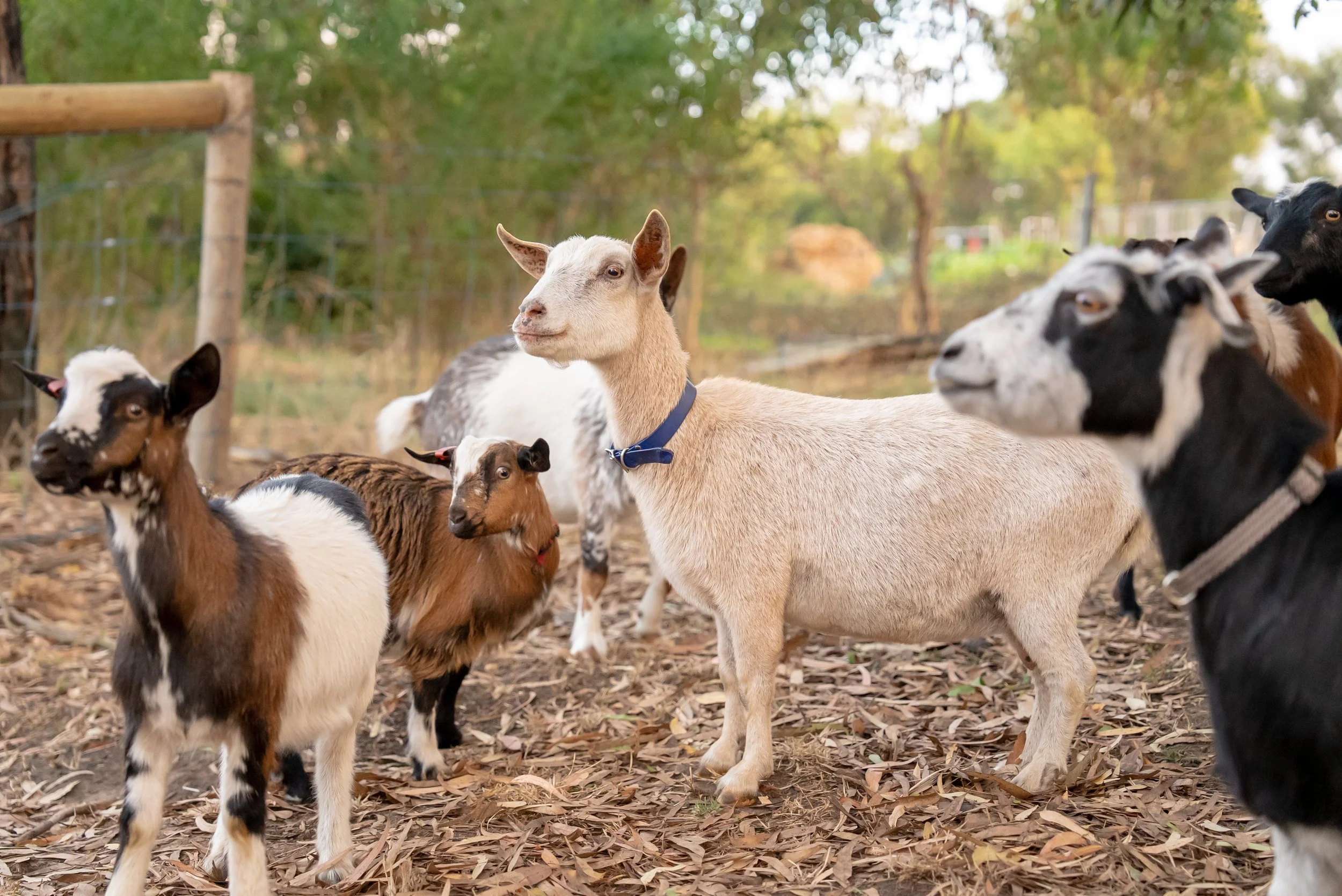
Nigerian Dwarf
Brief History
he Nigerian Dwarf Goat (ND) origins began in West Africa where it was established that there was a small type of hardy goat called the West African Dwarf (WAD). The locals used these goats for both their milk and meat. Introductions of specific dairy goats to West Africa had previously failed mostly because of their lack of disease resistance and inability to withstand extreme heat.
The ND was first imported to the US around the 1930's and initially used as zoo displays. Two distinct types of goats emerged: one type being heavier and stockier and is now known as the Pygmy while the other was a more refined, angular animal. It was the latter that was eventually bred to be the Nigerian Dwarf. In 1981, the ND was formally recognised by agoat registry, the International Dairy Goat Registry.
In 2013, the first frozen embryos were imported to Australia from Texas, US by Michael and Ulrike Garwood. (First Fleet). Many of the Australian ND genetics are influenced heavily from the Garwoods’ initial breeding programme. Other breeders have since invested in importing other excellent genetics from the US to further the breeds’s development in Australia.
Milk Composition and Uses
Goats milk is known for having many benefits to humans including easier to digest than cows’ milk, and having fewer allergens: cows’ milk contains both A1 and A2 casein (with A1 often being the cause for allergies and inflammation) but goats’ milk contains only A2 casein, a protein hailed as being the closet in its makeup to human breast-milk. Goats’ milk is also higher in calcium that cows’ milk making it ideal for those that are wanting to focus on bone strength.
ND milk is superior to other types of goat milk: it has the highest butter-fat (6-10%), milk solids and protein content (average 3.9%). This makes it ideal for a variety of uses: dairy products (eg. cheeses, yoghurt) and skin care products (eg. soaps, shampoos). It is very creamy and much sought after by those who may have allergies to other dairy products. Improving milk production alongside the structural capacity to carry that production efficiently is a key focus within our breeding programme, helping to promote both the long-term functionality and productivity of the breed.
Breed Characteristics
Nigerian Dwarf goats are a very friendly, adaptable hardy goat that respond well to a variety of climatic and husbandry conditions. ND’S are a miniature goat of balanced proportions and dairy conformation. The facial profile is straight or slightly concave, and ears medium length and erect. The coat is short to medium length. Eyes are occasionally blue. The male has a heavy beard.